

























Recent coverage says John Lynch told reporters the 49ers hired an independent scientist, that the facility was safe, and that measured EMF levels were 400 times less than an unsafe zone. Public reporting also says the scientist has not been identified in those stories, and the stories reviewed here did not link a full public report with methods, measurement locations, timing, or the exact standard used for the comparison. That matters, because 400 times below unsafe is only as meaningful as the benchmark and protocol behind it.
The teams framing lines up with the mainstream official position on low-frequency power-frequency fields: ICNIRP says its low-frequency guidelines are built to prevent established acute threshold effects such as nerve and muscle stimulation and retinal phosphenes, and WHO says there are no substantive public-health issues demonstrated for ELF electric fields at levels generally encountered by the public, while the long-term research focus for ELF magnetic fields has centered mainly on childhood leukemia. IARC has classified ELF magnetic fields as possibly carcinogenic to humans based largely on that leukemia association, while judging the animal evidence inadequate.
That is the official baseline. But it does not settle the 49ers question, because the 49ers controversy is not really about acute nerve stimulation thresholds. It is about whether chronic, oscillating field environments can affect biology upstream of visible injury in ways that are not captured by the old acute-threshold model. That is precisely the kind of issue that 400 times below unsafe does not answer by itself.
What the newest mechanism paper actually adds
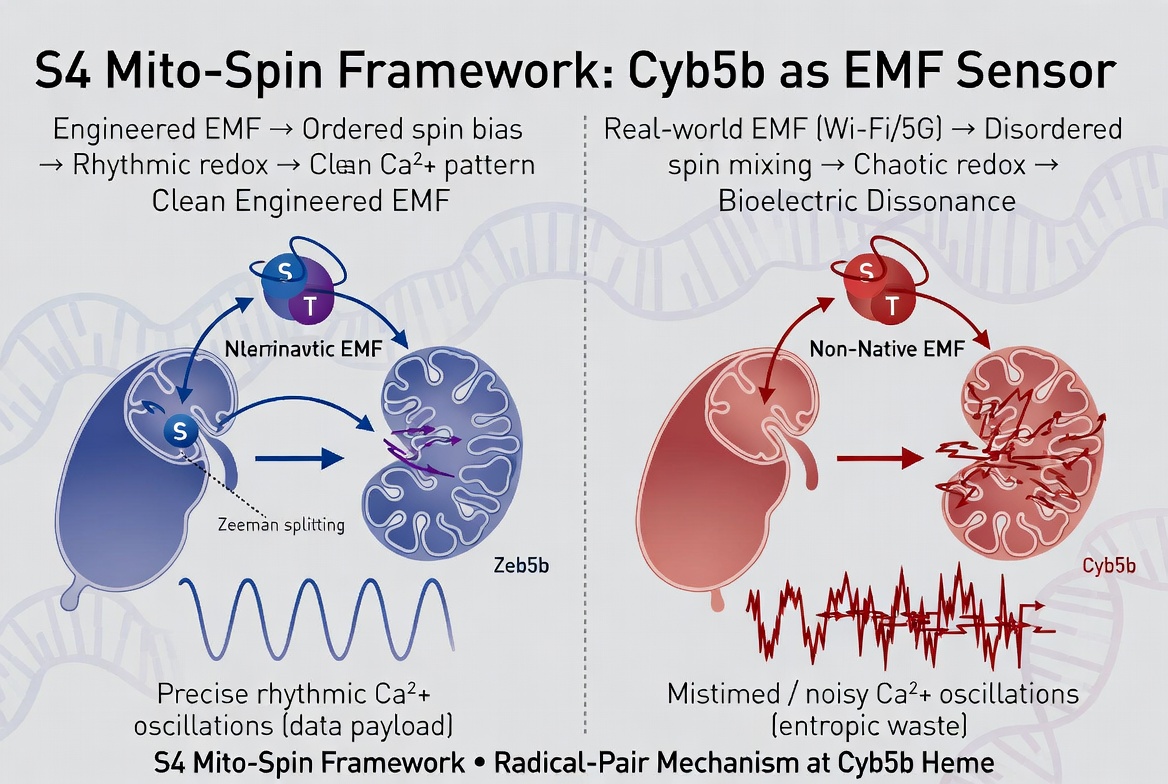
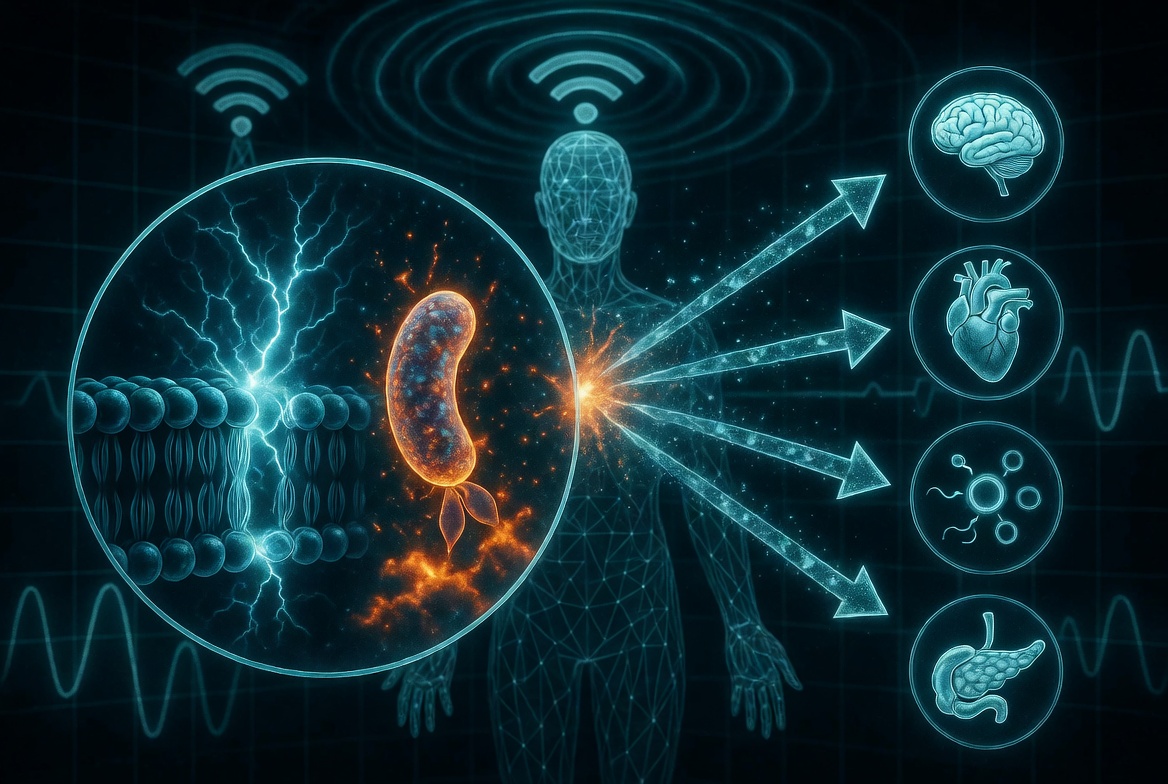
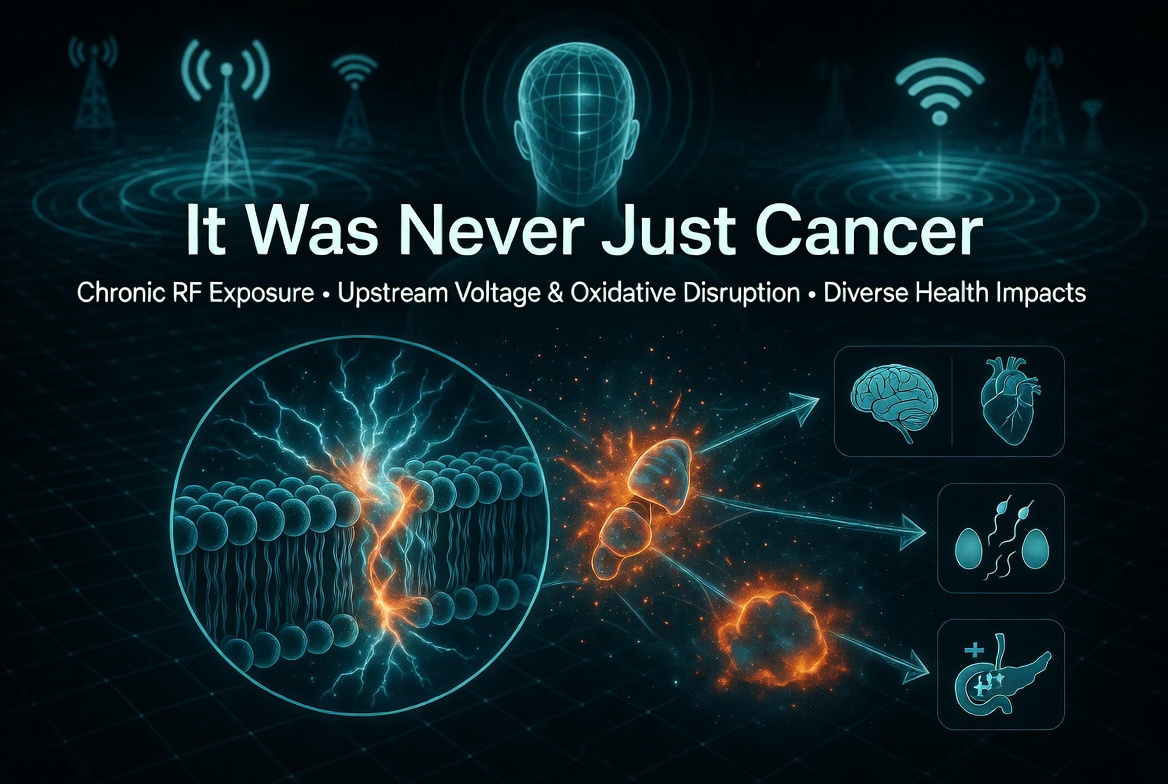
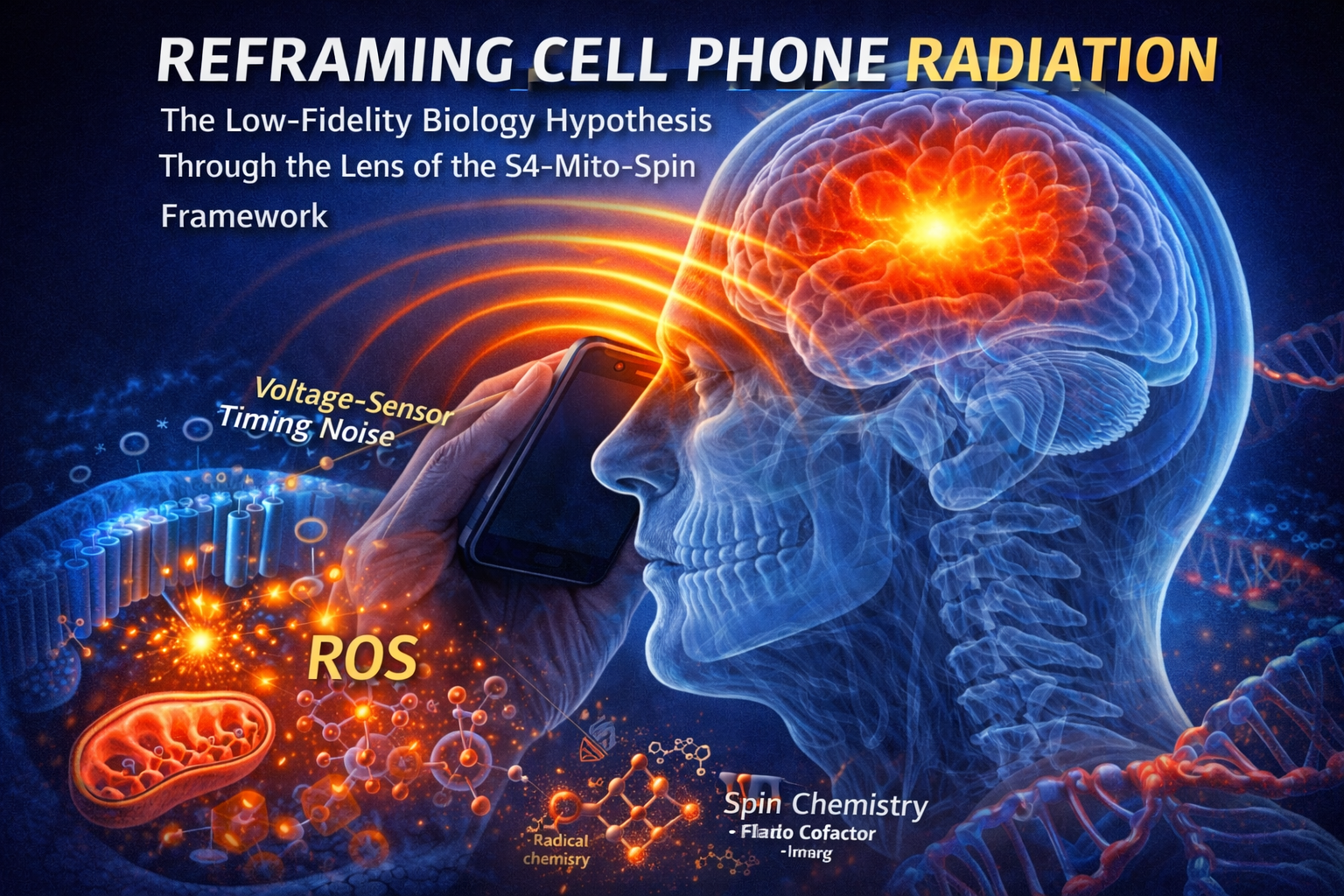
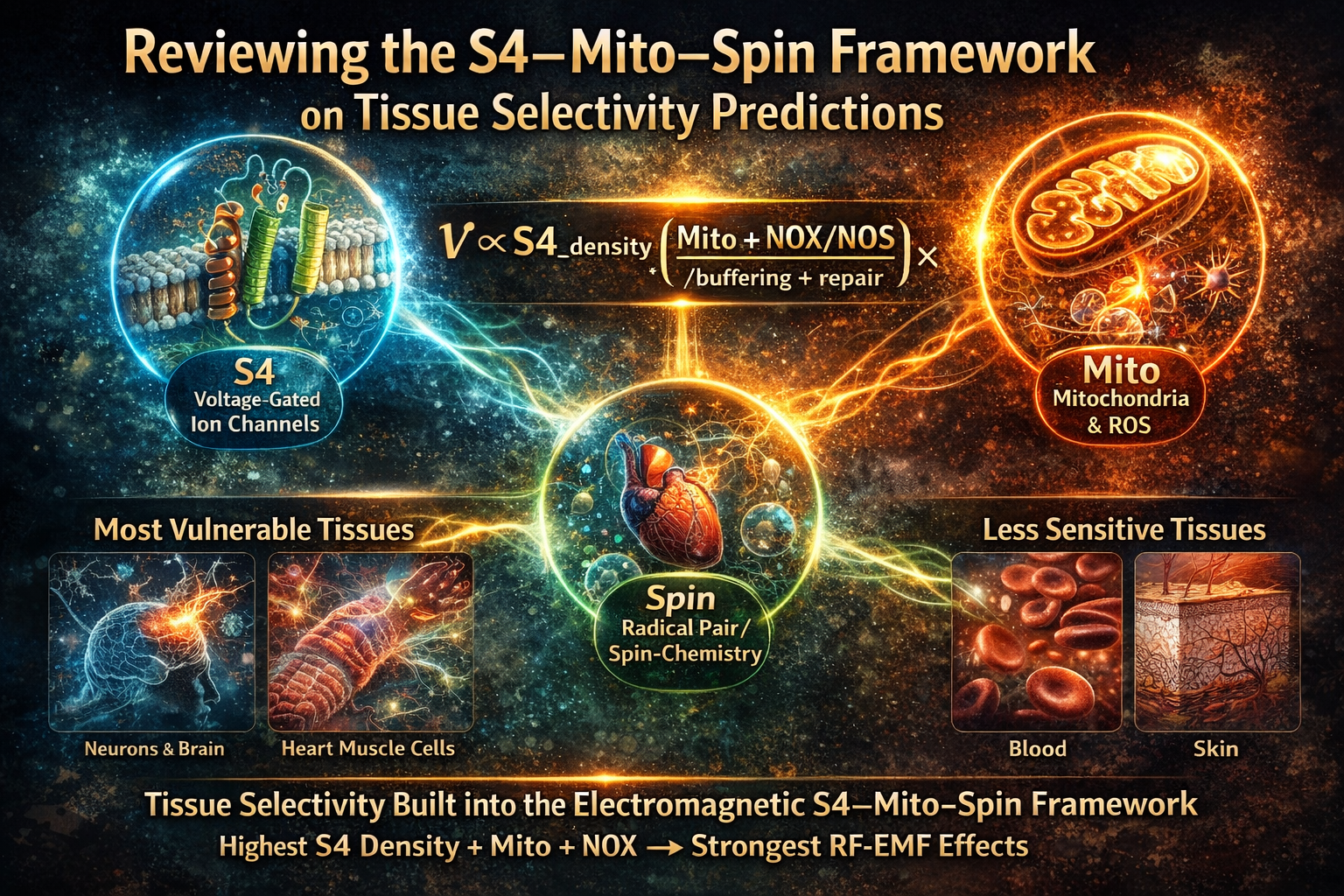
The most relevant new mechanistic paper is Panagopoulos et al. 2025 in Frontiers in Public Health. It is a review, not a direct study of the 49ers, but it is directly relevant to the logic of the debate because it explicitly covers anthropogenic extremely low-frequency (ELF) EMFs as well as wireless-communication EMFs. The paper argues that polarized, coherent, low-frequency-varying EMFs can drive ion forced oscillation in voltage-gated ion channels, causing irregular gating, disrupted intracellular ionic balance, and downstream ROS overproduction and oxidative stress. The authors present this IFOVGICROS chain as a unified mechanism for reported biological and health effects of anthropogenic EMFs.
That does not prove a Santa Clara substation caused ACL tears. But it does mean the strongest version of the nothing burger dismissal is too simplistic. If the relevant mechanistic hypothesis is upstream disruption of ion-channel timing, redox state, and signaling fidelity, then the right question is not Did the field cook tissue? The right question is whether the field environment could chronically perturb biological control systems that tissue repair depends on.
Why the 4,200-fold number matters and why it must be used carefully
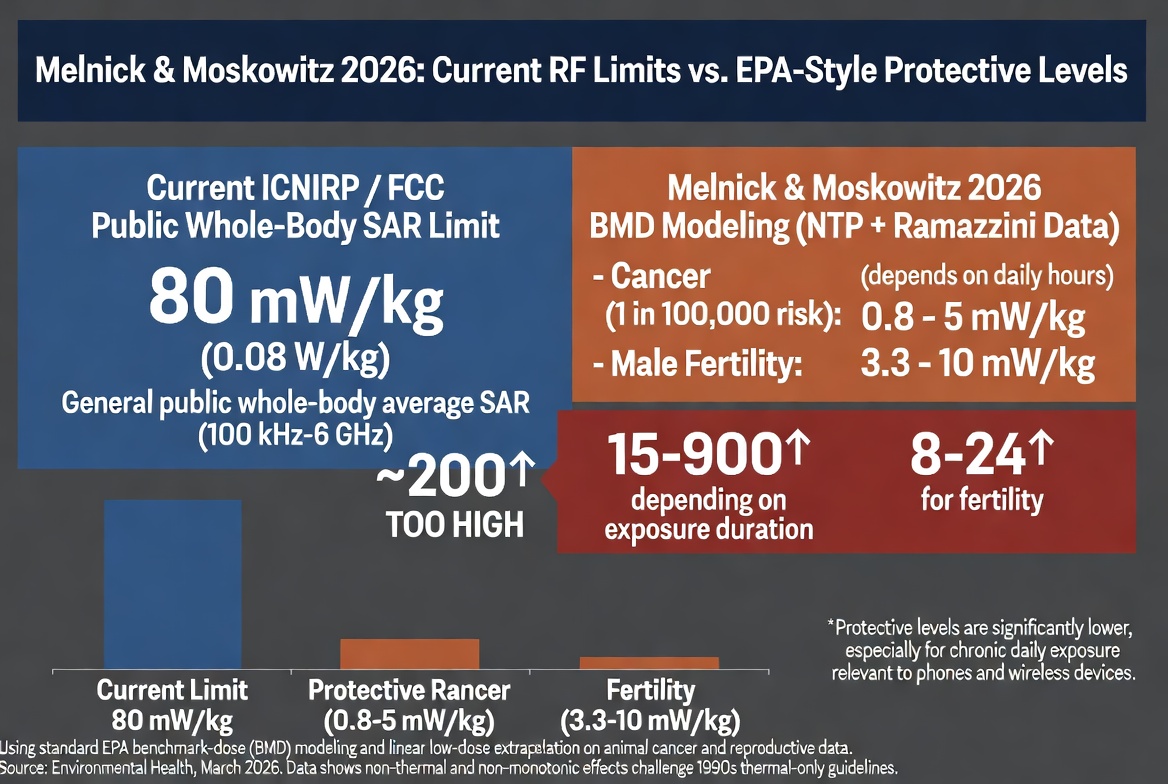
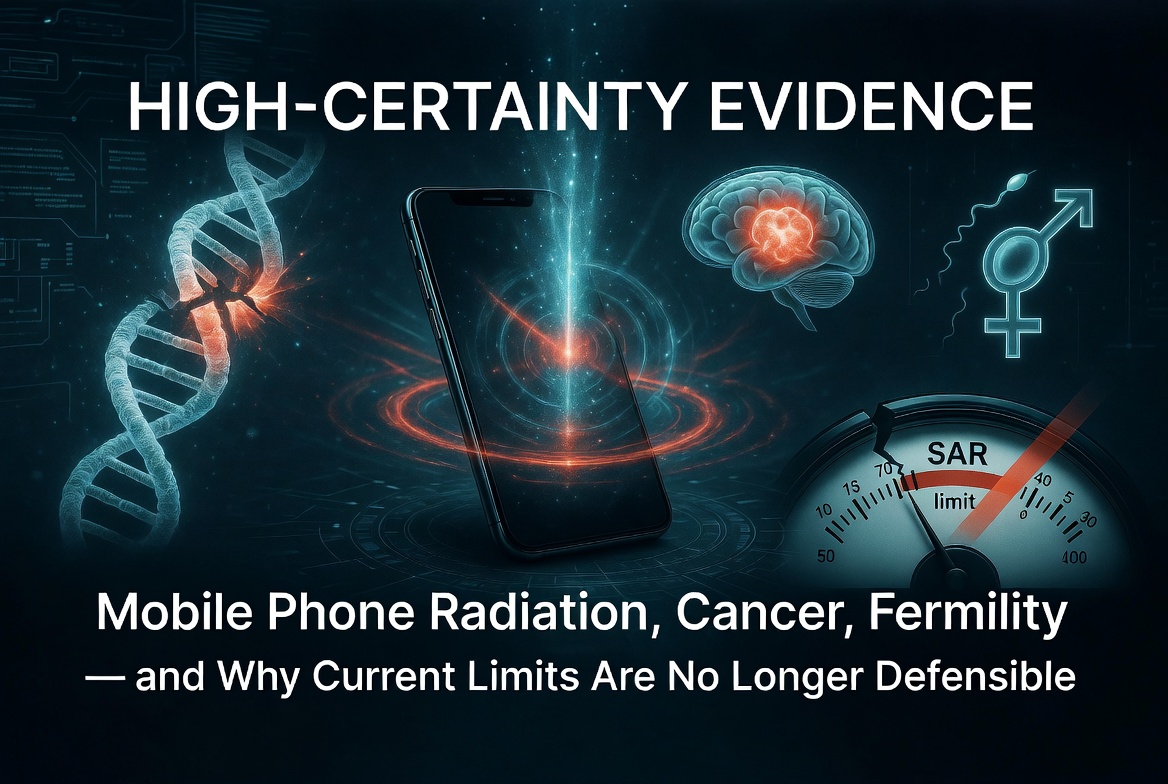
The March 14, 2026 Environmental Health paper by Ronald Melnick and Joel Moskowitz is real, and its published abstract says current public RF limits are 15- to 900-fold higher than the authors cancer-risk-based estimates, depending on daily exposure duration, and 8- to 24-fold higher than levels protective of male reproductive health. The paper derives health-protective whole-body SAR values of about 0.8 to 5 mW/kg for a 1 in 100,000 cancer risk and 3.3 to 10 mW/kg for male reproductive protection, versus the current public whole-body RF limit of 80 mW/kg.
The important caution is this: that paper is about RF exposure limits, built from NTP and related animal cancer and reproductive data. The published paper itself does not headline a 4,200-fold result for a 60 Hz electrical substation. The 4,200-fold figure you quoted comes from Ronald Melnicks later public explanation of the Ramazzini addendum, where he said that using power density for the Ramazzini base-station-style exposure data yielded a cancer-risk estimate for cell towers that was 4,200 times below the FCC limit for that context. That is a serious statement from Melnick, but it is a cell-tower/RF claim, not a direct published calculation about a 60 Hz substation. So it is powerful as an argument against the lazy use of below guideline = safe, but it is not a one-step proof that the 49ers substation is 4,200 times above a biologically safe ELF level.
That distinction actually makes the argument stronger, not weaker. The point is not that one can simply port the RF number onto a 60 Hz substation. The point is that a brand-new peer-reviewed paper has just shown, in a neighboring non-ionizing-radiation domain, that legacy public limits can be wildly out of step with health-protective risk methods. So the 49ers rhetorical move were hundreds of times below the limit, therefore the issue is finished is scientifically brittle.
The soft-tissue question is not crazy. It is under-studied and parameter-sensitive.
One reason the media can dismiss the story so easily is that there is no direct epidemiologic study showing a 60 Hz substation causes an NFL injury cluster. That is true, and any honest writeup should say it plainly. Even skeptical experts quoted in mainstream coverage have made the critique in exactly those terms: there are too many missing steps to leap from substation exposure to the full 49ers injury pattern. At the same time, the Washington Post reported at least one expert saying the theory is theoretically plausible, while others called for more research rather than total certainty.
But the absence of a direct NFL study is not the same thing as no biological relevance to connective tissue. In fact, the tendon and fibroblast literature shows the opposite: electromagnetic fields can clearly affect collagen-related and repair-related biology, but the direction of effect depends on waveform, frequency, flux density, timing, and exposure schedule. For example, low-frequency pulsed magnetic fields have been reported to modulate collagen production in cultured fibroblasts, to suppress type I collagen in human scleral fibroblasts under certain ELF conditions, and, under other controlled PEMF protocols, to enhance collagen synthesis in tendon cells or improve tendon healing in animal models.
That is exactly why the nothing burger framing fails scientifically. If specific electromagnetic waveforms are already used in orthopedics and tissue-healing research because they can change fibroblast, osteoblast, tendon-cell, or tendon-to-bone behavior, then the categorical claim that low-frequency fields are irrelevant to soft tissue is untenable. The real scientific question is which fields do what, under which parameters, in which tissues, for how long. That is a much narrower and more defensible hypothesis than EMFs cause all injuries, and it is the hypothesis that should have been transparently interrogated.
Why below the standard is not the same thing as biologically irrelevant
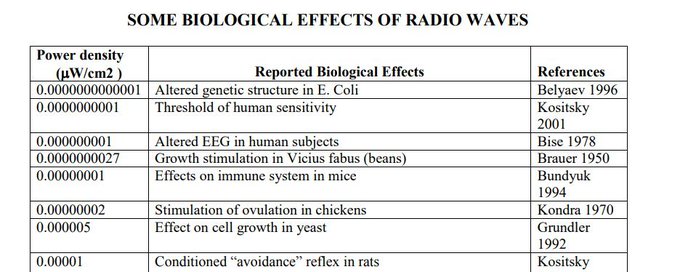
Guidelines are not all-purpose truth machines. ICNIRPs own low-frequency materials explain that the reference levels are designed so that threshold acute interactions are not reached inside the body. That is different from proving the absence of every conceivable long-term systems-level effect on repair, inflammation, oxidative signaling,or adaptation. Mainstream institutions currently think the long-term ELF evidence is insufficient for such claims. But that is a judgment about evidence completeness, not proof that the hypothesis is absurd.
And that is where the Panagopoulos paper becomes relevant again. Its thesis is not one disease, one cause. Its thesis is that oscillating anthropogenic fields can hit voltage-gated ion channels, induce oxidative stress, and degrade biological signaling fidelity upstream of multiple downstream phenotypes. That kind of mechanism would not be expected to map neatly to one endpoint. It would be expected to act as a vulnerability amplifier: slower repair here, altered redox balance there, noisier adaptation elsewhere. That is the opposite of a nothing burger. It is a systems-biology hypothesis that is difficult to falsify with a single one-line reassurance about a measurement being below an acute guideline.
The strongest honest conclusion
The strongest honest conclusion is this:
- The 49ers have not, in the public reporting reviewed here, provided enough methodological detail to let outsiders independently assess the 400 times below unsafe claim.
- Mainstream authorities do not currently accept a proven link between ordinary low-level ELF exposure and the kind of soft-tissue injury cluster alleged here. That is the official state of play.
- But it is false to say the biology question is empty. New mechanistic work explicitly argues that ELF and wireless EMFs can disrupt ion-channel function and oxidative balance, and the tendon/fibroblast literature shows electromagnetic fields can alter collagen and repair biology in parameter-specific ways.
- The 2026 MelnickMoskowitz paper does not directly prove the 49ers substation harmed players, but it does destroy the lazy assumption that being below a legacy non-ionizing-radiation limit automatically settles biological safety.
So Peters theory is best described not as proven, but as a testable, biologically literate, not-remotely-frivolous hypothesis that deserved a transparent methods report, named investigators, raw field data, and an explicit discussion of why acute-threshold guidelines were treated as sufficient to dismiss a chronic repair-biology question. That is a much stronger position than internet hyperbole, and it is also much harder to knock down.