




































(When Almost Everyone Else Gets It Wrong)
Since 1998, RF Safe has been on a single mission: protect people from wireless radiation without compromising the phone itself. We didn’t invent the problem — but we were the very first company in the world to offer a real solution in partnership with the Aegis Corporation back in the late 1990s.
While the rest of the industry was still figuring out flip phones, we were already engineering cases that respected physics instead of fighting it.
Two Broken Approaches — And One That Actually Works
Walk into any store or scroll Amazon and you’ll see phone cases divided into two very different (and very flawed) camps:
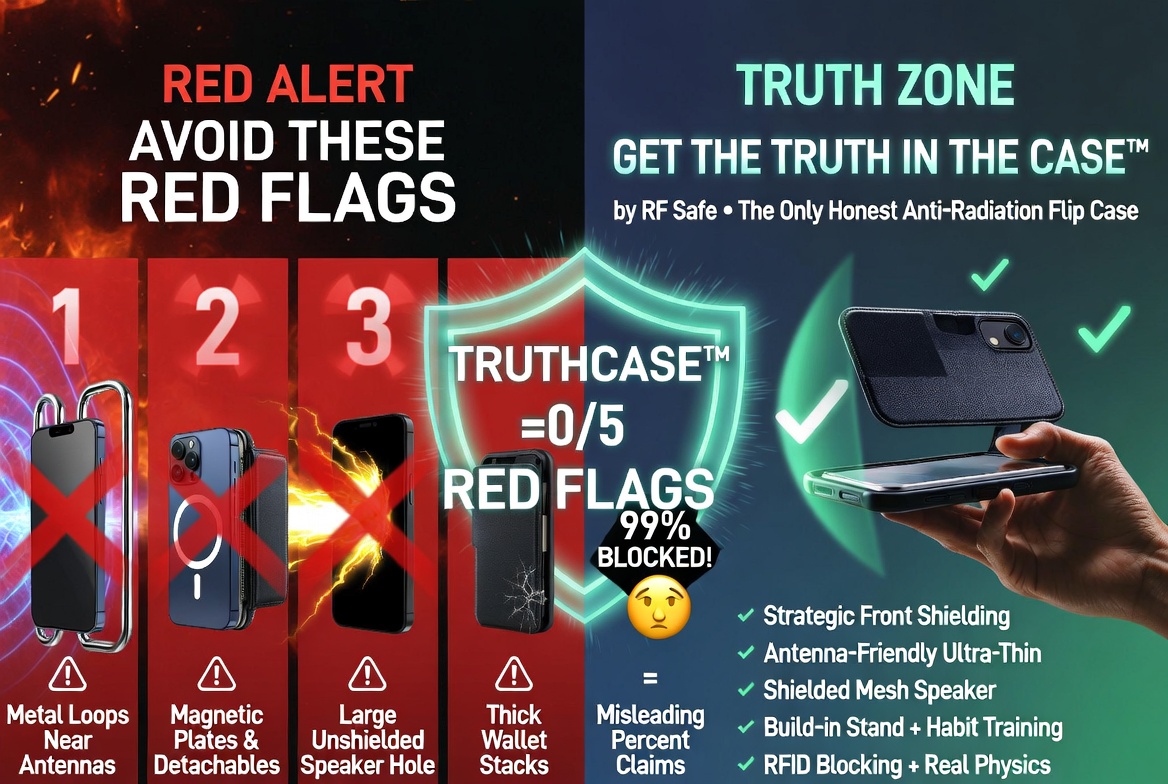
1. Conventional cases These brands pretend radiation isn’t even an issue. They slap on metal loops, thick magnets, wallets, kickstands — anything that looks cool. The antenna gets blocked? “No big deal,” they say. The phone quietly ramps up its power output to compensate, and users get higher exposure without ever knowing it.
2. Most “anti-radiation” cases These brands at least admit radiation is a concern… but then they sabotage their own promise. They use large metal plates, strong magnets, and detachable “flip” designs that cover the antenna area. The result? The same problem conventional cases create — unpredictable radiation patterns and forced power increases — plus the added illusion of safety. Many only lab-test the shielding fabric in isolation (not the finished phone + case together) and then market it as if the entire case is FCC-accredited. That’s not just misleading — it’s dangerous.
We’ve watched this for over a quarter century. Even other brands in the space (including Vest) have started publicly calling out the worst offenders for exactly these deceptive practices.
The Physics Nobody Talks About
Here’s the uncomfortable truth the entire industry has ignored for decades:
Anything you attach to the back of a phone affects the antenna. Magnets, metal plates, thick shielding layers — they all interfere. The phone detects weaker signal and boosts its transmit power. Suddenly you’re getting more radiation, not less. And because the interference creates hot spots and strange scattering patterns, the exposure around the device becomes unpredictable.
That’s why RF Safe has never sold a detachable case with magnets or large back plates. That’s why we’ve never chased “99% blocked!” headlines. We’ve always believed that the design of the hardware matters more than any marketing claim.
What Makes RF Safe Different — And Why It Still Matters in 2026
We are the only company on the planet that has spent 27 straight years obsessing over one thing: build a case that reduces exposure without making the phone work harder.
Our TruthCase™ and QuantaCase™ philosophy is simple:
- Front-flap shielding only (the side facing your body)
- Zero metal loops, zero strong magnets, zero antenna-blocking plates
- Ultra-thin, physics-first construction that lets the phone operate at its lowest possible power level
- Real-world meter demonstrations instead of isolated fabric swatches
We were the pioneers in 1998. We’re still the only ones doing it right in 2026.
While others chase trends and detachable accessories, we’ve stayed laser-focused on the one thing that actually protects you: correct design.
It’s Time the World Paid Attention
For too long, consumers have been given false choices:
- Ignore radiation completely, or
- Buy “protection” that secretly makes things worse.
RF Safe exists in the category that should have always been the only one: honest, physics-respecting, antenna-friendly shielding that actually lowers your exposure.
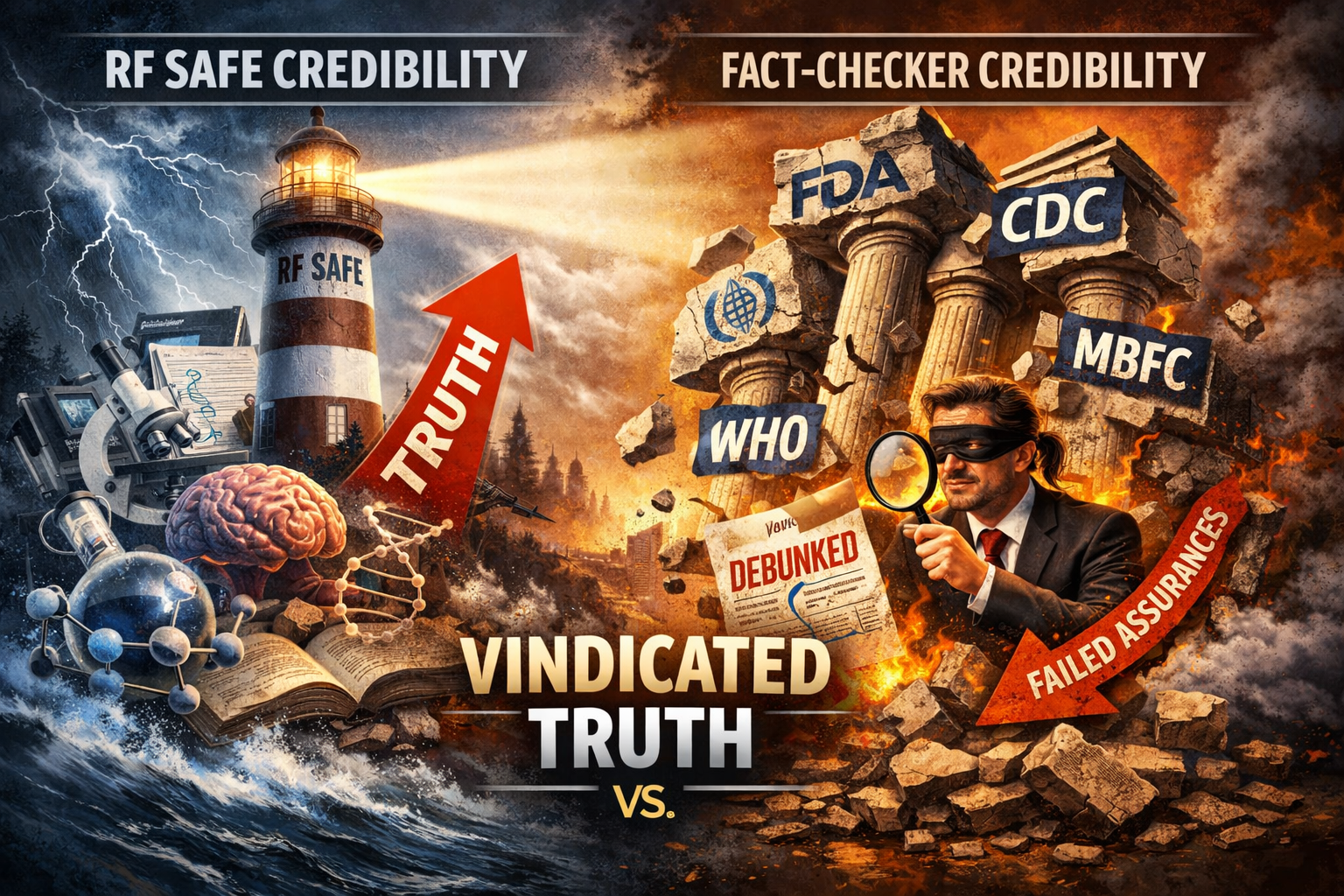
We’ve been saying this since the 1990s. The science has only grown stronger. The court rulings, the NTP studies, the international warnings — they all point in the same direction.
The message is simple: If you care about reducing radiation without compromising your phone, there’s only one name that has earned the right to say it.
Be RF Safe.
Ready to experience the difference 27 years of uncompromising design makes? Explore the QuantaCase collection or shop by your exact phone model — and finally get the protection you’ve been waiting for.
(Est. 1998 — Still the original. Still the only.)